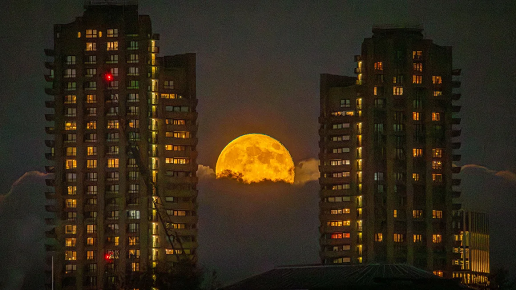
The last supermoon of the year will peak alongside the Leonid meteor shower
This Friday marks the arrival of November's full moon, also known as the beaver moon, and it coincides with the Leonid meteor shower, offering a celestial spectacle for sky-gazers. The beaver moon, named after beavers' preparation for winter, is the last supermoon of the year, reaching its peak at 4:29 p.m. ET. This supermoon appears slightly larger and brighter as the moon is at its closest point to Earth, though not as close as October’s full moon.NASA’s Noah Petro suggests viewing the moon as it rises above the horizon for a “moon illusion,” where it appears larger due to its comparison with objects on the ground. While the science behind this illusion remains uncertain, it offers a mesmerizing experience.The Leonid meteor shower, which peaks from Saturday night to early Sunday, may produce around five meteors per hour, as the full moon’s brightness could obscure fainter meteors. For optimal viewing, face east with the moon out of sight and observe late at night or near dawn, according to the American Meteor Society. A meteor from the Leonids is seen streaking across the sky over Ankara, Turkey, in 2020. Dogukan Keskinkilic/Anadolu Agency/Getty ImagesUpcoming celestial events include the Geminids meteor shower on December 12-13 and the Ursids on December 21-22. December’s full moon, the cold moon, will shine on December 15, closing 2024’s lunar cycle.