



“Why does everyone else's baby fall asleep in 10 minutes, while mine takes several hours?” Many parents dealing with babies who have disrupted sleep may try picking them up and putting them down, settling them when they are half-asleep, adjusting their wake windows, delaying bedtime, or even trying various sleep-training methods. Yet their children may still struggle to fall asleep consistently.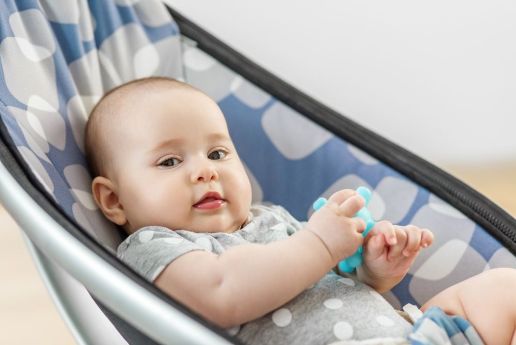 Babies with higher alertness may have more difficulty settling down to sleep. Parents can observe their baby's sleep cues and needs. (Photo/MamaBaby)
Highly Alert and Full of Energy, Some Babies May Find It Harder to “Switch Off”
Some babies show a high level of alertness from birth, often keeping their eyes wide open as they observe their surroundings. As these children grow, they may continue to have a high level of alertness. Even when it is time to rest, their brains and nervous systems may remain active, making it harder for them to settle down and fall asleep than other children.
When a child appears to be full of energy, parents may easily assume, “He simply doesn't need to sleep,” and consequently delay naps or bedtime. However, a child's need for sleep does not disappear simply because they seem energetic. Being overtired may actually make it harder for a child to enter stable sleep, creating a cycle in which “the more tired they are, the harder it is to fall asleep.”
In addition, some children are particularly resistant to change. When parents begin adjusting their usual way of helping the child fall asleep, such as reducing rocking, holding, or the amount of parental presence, the child may show strong resistance, and the reaction may continue for several days or even longer.
For children like these, instead of frequently switching between different methods, it may be better to choose one small adjustment at a time that parents can maintain over the long term. For example, parents can gradually reduce one particular sleep dependency while maintaining a consistent daily schedule and bedtime routine.
Afraid of Missing Out, Sensitive Babies May Also Be Easily Distracted by Their Environment
Some children may still refuse to sleep even after showing signs of tiredness, as if they do not want to miss what is happening around them. For these children, going to sleep may feel like a loss because it means “stopping exploration.” As a result, they may take only short naps, take a long time to settle at night, or even open their eyes again as soon as they are placed in bed.
If parents wait until their child is extremely tired before preparing for sleep, they may actually miss the child's optimal window for falling asleep. Rather than simply watching to see whether “the child looks tired,” it is more important to pay attention to a consistent schedule and the child's usual sleep cues, while allowing enough time for the transition into bedtime. When babies have difficulty falling asleep due to emotional or environmental stimulation, parents can help them relax through calm and consistent support. (Photo/MamaBaby)
The sleep environment can also affect these children. Babies who are more sensitive to environmental stimulation may find it difficult to relax because of lighting, sounds, room decorations, temperature, the feel of their clothing, or even how their bodies feel after a bath.
Parents can reassess the sleep environment based on their child's sensory needs, such as dimming the lights, reducing unnecessary sounds and visual stimulation, and establishing a simple, consistent bedtime routine. This can gradually help the child understand that “it is time to rest.”
When Emotions Explode, Some Children Cannot Easily Calm Down — Parents Shouldn't Blame Everything on “Bad Habits”
Some children may experience a rapid escalation of emotions when they become angry, frustrated, or overstimulated. When the nervous system is already under a high level of stress, children may not have enough capacity to calm themselves down, making it even more difficult for them to transition smoothly into sleep.
At such times, if parents simply tell their child to “calm down on your own,” “stop crying,” or continue with sleep training, they may not be addressing the underlying issue. Related recommendations suggest that parents can first help their child regulate their emotions by lowering their own voice, slowing their breathing, and providing steady support. Once the child has calmed down, parents can gradually help them develop the ability to fall asleep independently.
This also means that sleep training does not necessarily produce the same results for every child. Behavioral interventions can improve children's sleep on average, but being “effective on average” does not mean that every child will reach the goal at the same pace or in the same way.
When a child reacts strongly to common approaches, parents do not need to immediately blame themselves for “holding the baby too often,” “responding too quickly,” or “not being persistent enough.” A child's temperament can indeed influence sleep, and temperament is partly an innate trait, but this does not mean that their future sleep patterns can never change.
What may truly need to be adjusted is not constantly searching for one sleep method that “works for every child,” but gradually establishing a sleep routine that suits the family based on the child's level of alertness, sensitivity, emotional responses, and willingness to accept change. When parents shift from asking, “What am I doing wrong?” to asking, “What kind of help does my child need right now to calm down?”, they may also gain a clearer understanding of the possible reasons behind their child's sleep difficulties.
This article is used with permission from MamaBaby.